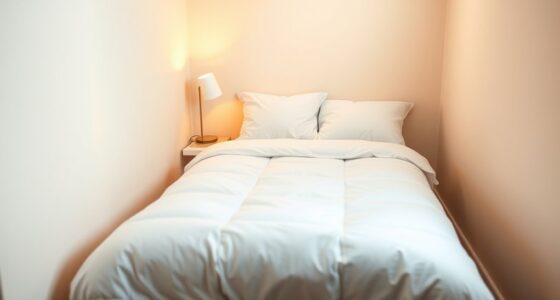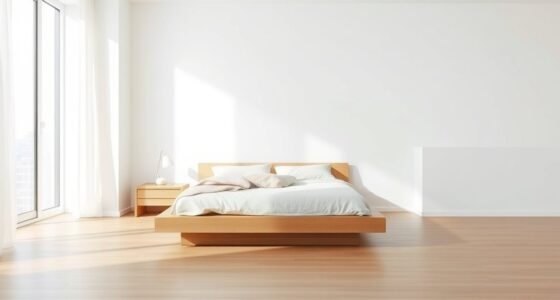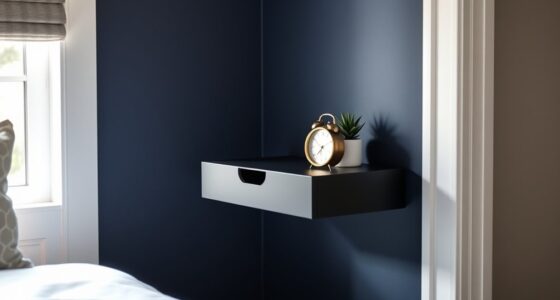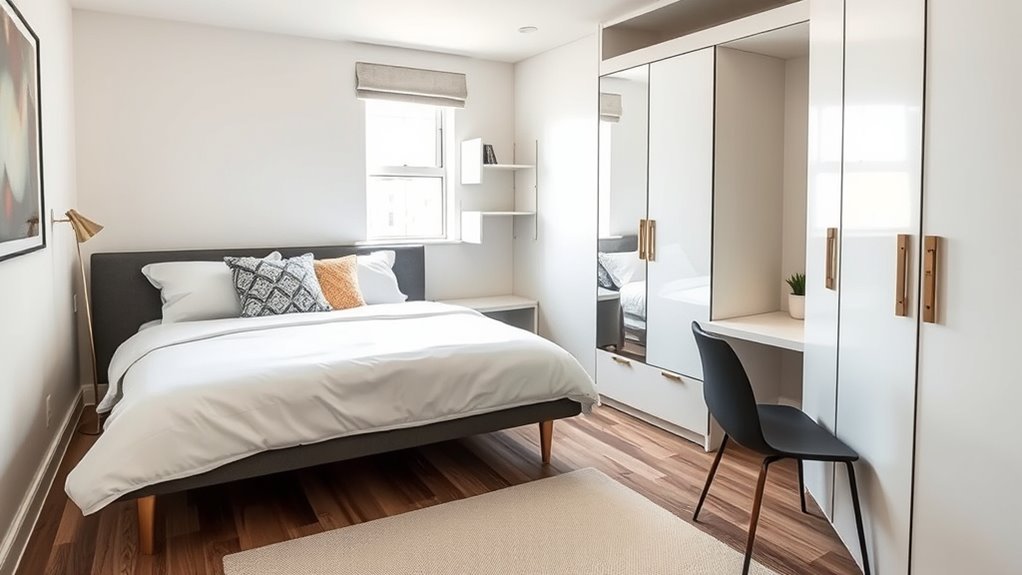

To maximize space in your tiny bedroom, prioritize essentials and choose multi-functional furniture like beds with built-in storage or foldaway desks. Place the bed against a wall to free up floor area and use vertical storage options such as tall shelves or floating units. Keep pathways clear and create zones for different activities with lighting and color. For even more space-savvy tips, explore strategies that help you make the most of every inch.
Key Takeaways
- Place the bed against a wall to maximize floor space and avoid blocking pathways or windows.
- Use multi-functional furniture like beds with built-in storage or foldaway desks to save space.
- Maximize vertical space with tall shelves and wall-mounted storage for books and accessories.
- Keep pathways clear by arranging furniture to avoid blocking doors and creating easy movement.
- Choose sleek, low-profile furniture and avoid clutter to enhance openness and maintain a clean look.

Lifezone Queen Bed Frame with 2-Tier Storage Headboard, Metal Platform Bed Frame with 4 Storage Drawers, Built in Charging Station & LED, Noise-Free/Metal Support/No Box Spring Needed, Rustic Grey
【Storage Headboard with Charging Station】The headboard is equipped with a built-in charging station, including 2 AC Outlets, a…
As an affiliate, we earn on qualifying purchases.
As an affiliate, we earn on qualifying purchases.
Assess Your Space and Prioritize Essentials

Before you start arranging furniture, it’s essential to understand the space you’re working with. Measure your room carefully, noting the size and placement of windows, doors, and outlets. Decide on your essential pieces—bed, wardrobe, maybe a small desk—and prioritize their placement. When considering color schemes, opt for light, neutral tones to create an airy feel, making the room seem larger. Think about lighting options too—maximize natural light with window treatments that don’t block it and add layered lighting like wall sconces or compact lamps to brighten dark corners. This assessment helps you visualize how each piece fits without overcrowding, ensuring you focus on essentials first. Incorporating space-saving furniture can further enhance the feeling of openness. Additionally, choosing versatile and multi-functional furniture pieces can help maximize your limited space without sacrificing style. Using vertical storage solutions can also free up floor space and keep your room organized. With a clear plan, you can create a functional, spacious layout that feels inviting and well-organized.

TEMI Small Computer Desk Folding Table – 35.8" Foldable Office Desk, No Assembly, Perfect for Small Spaces in Bedroom, Dorm, or Apartment, Portable Mini Desk or Study Table with Compact Design, Brown
👍𝗡𝗢 𝗔𝗦𝗦𝗘𝗠𝗕𝗟𝗬 𝗥𝗘𝗤𝗨𝗜𝗥𝗘𝗗 – 𝗥𝗘𝗔𝗗𝗬 𝗧𝗢 𝗨𝗦𝗘 — Enjoy the convenience of a folding table that arrives fully…
As an affiliate, we earn on qualifying purchases.
As an affiliate, we earn on qualifying purchases.
Choose Multi-Functional Furniture Pieces
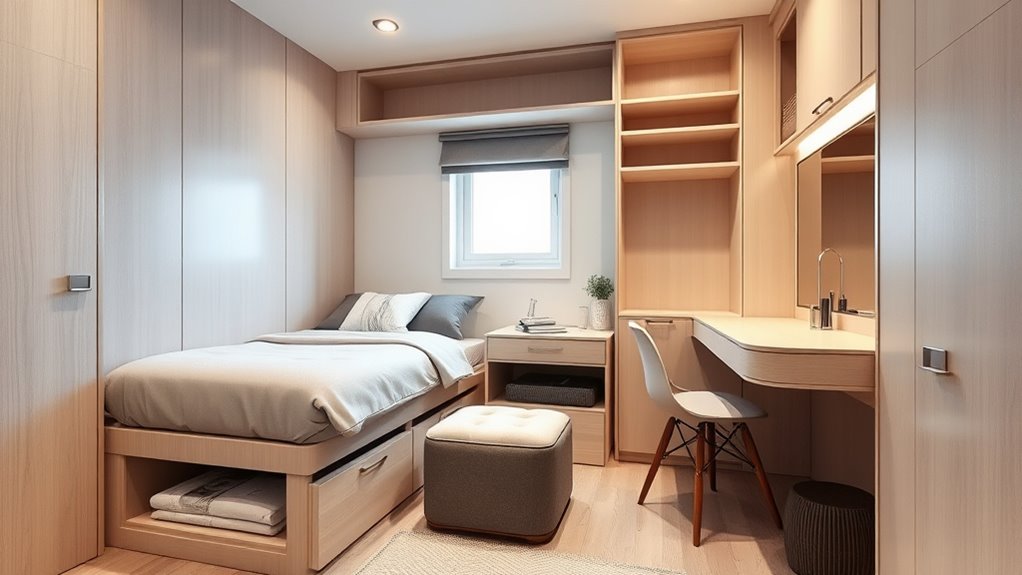
To maximize your space, consider furniture that serves more than one purpose. Dual-purpose bed frames with built-in storage, storage-integrated furniture, and foldable or convertible pieces can help you save room. These versatile options make your tiny bedroom both functional and clutter-free. Incorporating multi-functional furniture can further enhance your space efficiency by combining storage, seating, and sleeping areas into one piece. Additionally, selecting pieces made from space-saving designs ensures that every inch of your small room is utilized effectively. Choosing furniture that offers easy-to-clean materials also helps in maintaining a tidy and welcoming environment, while necessary cookies ensure that your browsing remains smooth as you explore different options. Including compact storage solutions can optimize vertical space and reduce clutter.
Dual-Purpose Bed Frames
In a tiny bedroom, choosing a dual-purpose bed frame can maximize your space and add functionality. Look for bed frame styles that combine a bed with built-in storage drawers or shelves to keep clutter at bay. Material options vary from sleek metal frames to sturdy wood designs, allowing you to match your room’s aesthetic. Metal frames are lightweight and modern, while wood offers warmth and durability. Some frames even feature fold-out desks or hidden compartments, giving you extra surface area or storage without taking up additional space. When selecting a dual-purpose bed, prioritize those that suit your style and storage needs. This way, your bed becomes a practical centerpiece, freeing up room for other essential furniture pieces.
Storage-Integrated Furniture
Choosing furniture that combines storage with function is a smart way to make the most of your tiny bedroom. Opt for bedside tables with built-in drawers or shelves to keep essentials close without cluttering your space. Storage ottomans serve dual purposes—they provide a comfortable seat or footrest while hiding away blankets, books, or other items inside. These multi-functional pieces help eliminate the need for extra storage units, freeing up valuable floor space. When selecting bedside tables, look for compact designs with multiple compartments. For added versatility, consider glamping-inspired furniture pieces that are both stylish and space-efficient. For storage ottomans, choose ones that are lightweight and easy to move, so you can adapt your layout as needed. Incorporating these versatile furniture pieces maximizes storage and keeps your tiny bedroom organized and open. Additionally, selecting furniture with built-in storage solutions can further optimize your limited space and reduce clutter. Using multi-functional furniture helps create a clutter-free environment and enhances the overall comfort of your small bedroom. Opting for space-saving designs ensures every inch of your room is utilized effectively, making your small space feel larger and more comfortable.
Foldable and Convertible Pieces
When space is limited, foldable and convertible furniture becomes your best ally, seamlessly transforming to meet your needs. Murphy beds fold up into the wall, freeing floor space during the day, while foldaway desks tuck neatly away when not in use. These pieces help maximize your small room’s functionality without sacrificing style. You can also consider sofa beds or foldable tables that expand when needed and collapse afterward. Here’s a quick visual guide:
| Furniture Type | Space-saving Feature | Ideal For |
|---|---|---|
| Murphy beds | Fold into wall or cabinet | Sleeping area |
| Foldaway desks | Hidden when not in use | Workspace or study area |
| Foldable tables | Collapse to save space | Dining or work surface |
| Convertible sofas | Becomes bed or lounger | Seating and sleeping |
| Multi-functional chests | Storage + seating | Additional storage + seat |
Additionally, incorporating multi-functional furniture can further optimize your space by combining multiple uses into a single piece. Using space-saving solutions enhances overall room organization and efficiency. Incorporating compact design principles ensures your small bedroom remains comfortable and functional. For example, choosing pieces with hidden storage compartments can help keep clutter out of sight and maintain a clean look. Furthermore, selecting furniture with adjustable features allows for flexibility as your needs change over time.

Fixwal Wall Decor 7 Tier Wall Shelf Unit Floating Shelves with LED Lights Lack Shelf for Home Organizer Display White
Stable Design: Built with premium engineered wood, this 76.8×9.85×9.25 inches shelf can handle up to 44 lbs in…
As an affiliate, we earn on qualifying purchases.
As an affiliate, we earn on qualifying purchases.
Optimize Bed Placement for Maximum Floor Space
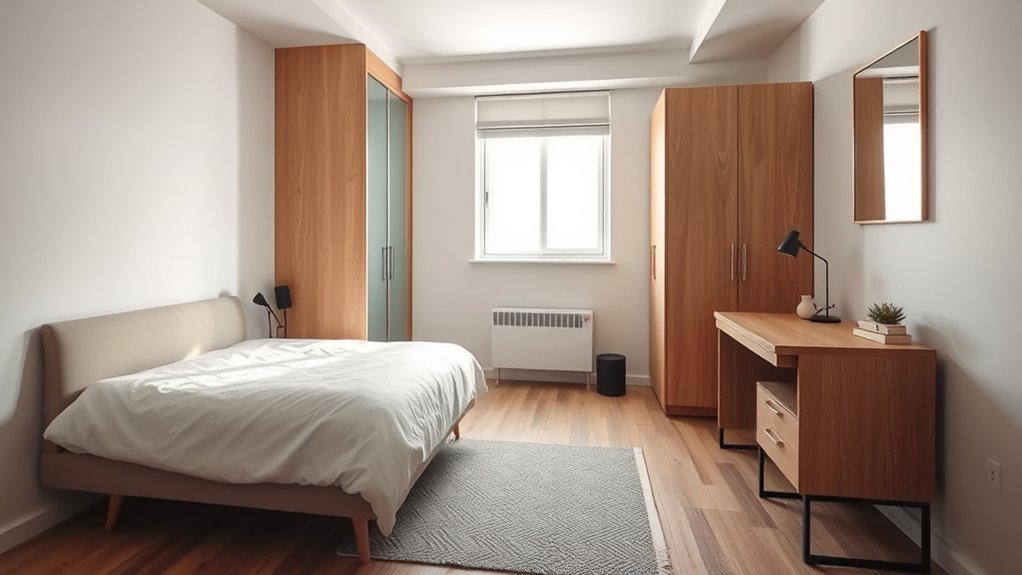
To maximize your floor space, placing your bed against a wall is often the most effective strategy. Consider your bed’s height and mattress size to make certain it fits well without overwhelming the room. A lower bed or platform with minimal height creates a sleek look and frees up visual space, making the room feel larger. Opt for a mattress size that suits your needs but isn’t bulky; a twin or full size can provide comfort without sacrificing space. Position the bed against the wall that offers the most open area, avoiding corners that can make the space feel cramped. Keep pathways clear and avoid placing furniture in front of doorways or windows. Proper bed placement will open up your room and maximize usable floor space. Smart space utilization techniques can also help you organize other furniture efficiently, especially as automation tools in interior design become more accessible. Incorporating smart home devices, like automated lighting or storage solutions, can further enhance your room’s functionality and perceived spaciousness. Additionally, considering multi-functional furniture can provide extra storage and flexibility in tiny rooms.

24/7 Shop at Home Kavren Modern 37-inch Oval Glossy Low Profile Coffee Table, Stone Shape Living Room Furniture for Small Space, Dark Brown
✨SCULPTURAL & CHIC: With a unique, low-profile design that's both bold and cute, this brown table works great…
As an affiliate, we earn on qualifying purchases.
As an affiliate, we earn on qualifying purchases.
Use Vertical Storage Solutions
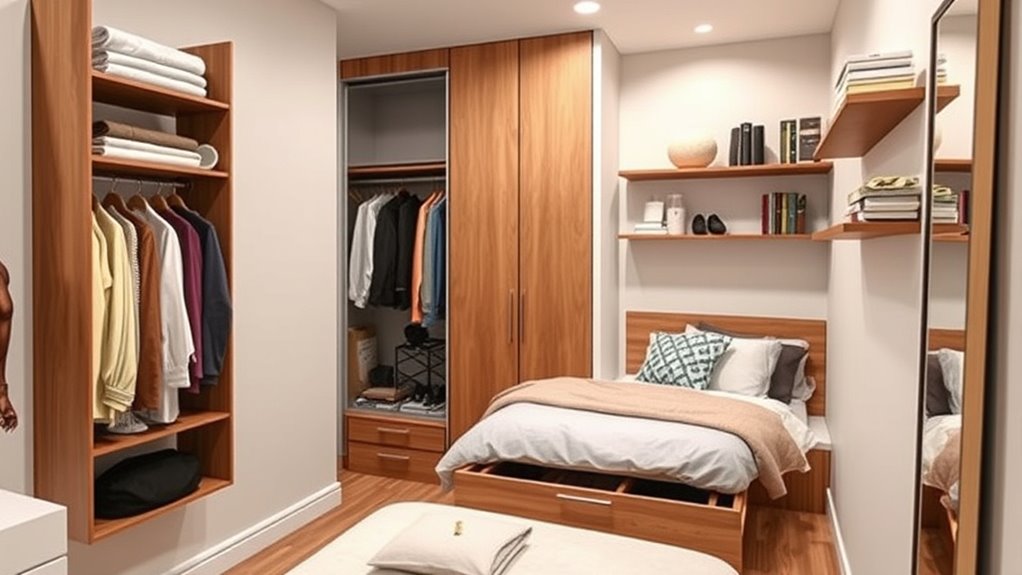
To make the most of limited space, focus on maximizing your wall area. Tall shelves can store your belongings without taking up valuable floor space. By choosing vertical storage solutions, you keep your room organized and open. Additionally, incorporating online resources can help you find the best storage options and ideas for your specific needs. Exploring sustainable storage solutions can also help you select eco-friendly and space-efficient furniture options that support your sustainable living goals. Consider using low light office plants that can thrive in shaded areas of your room to add greenery without requiring extra space.
Maximize Wall Space
Maximizing wall space is essential in a tiny bedroom, as it helps you keep the floor area open and uncluttered. Vertical storage solutions allow you to utilize your walls efficiently, freeing up space for other furniture. To enhance your room’s look, consider these tips:
- Hang decorative accents like artwork or mirrors to add personality and reflect light.
- Use wall-mounted shelves for books, accessories, or small storage boxes.
- Incorporate pegboards for versatile organization of jewelry, bags, or clothing.
- Choose a cohesive color scheme for your wall decor to create a sense of harmony and openness.
- Integrate high-quality wall decor to elevate your space with durable and stylish accents that stand out. Additionally, selecting durable materials ensures your wall solutions withstand everyday use and last longer.
Opt for Tall Shelves
Opting for tall shelves is an effective way to maximize vertical space in a tiny bedroom. Floating shelves are perfect for this, as they add storage without taking up floor area. Install them higher on the wall to keep your essentials accessible yet out of the way. Consider decorative towers or tall bookcases to use vertical space efficiently, giving you more room for other furniture. These tall units can serve as focal points, adding style while providing ample storage for clothes, books, or decor. By going vertical, you free up precious floor space, making your tiny bedroom feel more open and organized. Remember to secure tall shelves properly to ensure safety, especially if you have pets or children. Vertical storage solutions like floating shelves and decorative towers are key to a functional, spacious tiny bedroom.
Create Zones for Different Activities
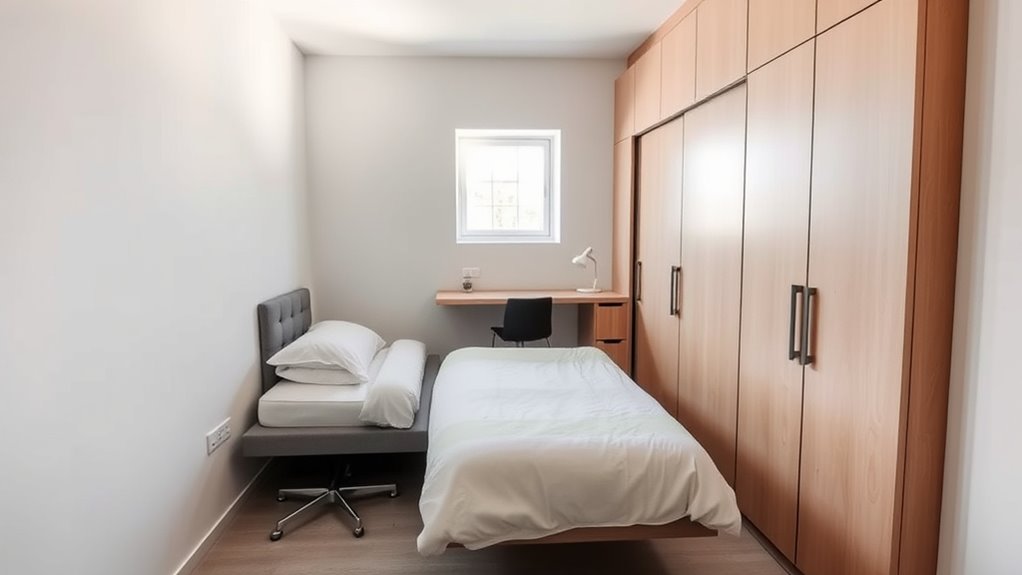
Creating designated zones in a tiny bedroom helps you make the most of limited space and keeps things organized. To effectively create zones, consider these steps:
Maximize small bedrooms by creating functional zones for organization and style.
- Use bedroom lighting to define areas—bright lights for the workspace and softer lighting for relaxation zones.
- Choose distinct color schemes for each zone to visually separate activities, like calming blues for sleeping and energizing yellows for studying.
- Arrange furniture so each zone has its own purpose, such as a small desk in one corner and a cozy bed area.
- Keep zones functional by limiting clutter and maintaining clear boundaries, which enhances both space and flow.
Keep Pathways Clear and Uncluttered
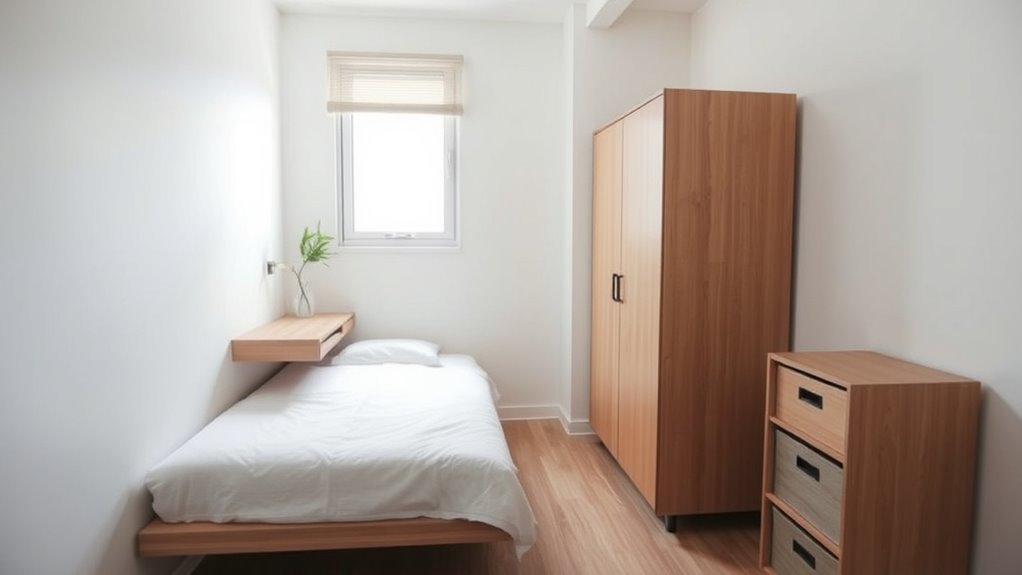
Since space is limited in a tiny bedroom, keeping pathways clear and uncluttered is essential for easy movement and safety. Arrange your furniture so that bedside tables don’t block doorways or windows, allowing for smooth navigation around the room. Avoid overcrowding surfaces with decorative accents; instead, choose a few meaningful pieces to reduce visual clutter. Clear pathways make the room feel more open and accessible, making it easier to access your bed, closet, and other essentials without tripping or bumping into furniture. Regularly tidy up and reorganize to prevent accumulation of unnecessary items. By maintaining open, unobstructed pathways, you create a more functional space where you can move freely and feel more relaxed in your tiny bedroom.
Incorporate Mirrors to Enhance Openness
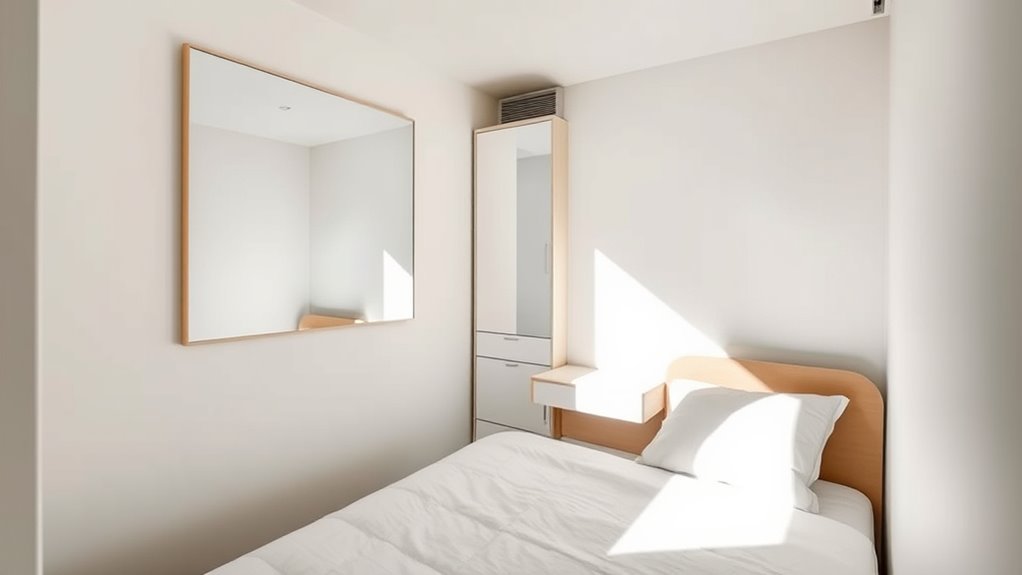
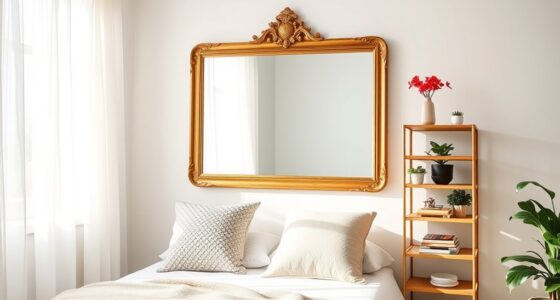
Adding mirrors to your tiny bedroom instantly makes the space feel larger and more open. Place a large mirror opposite your window to reflect natural light and amplify brightness. Consider these tips:
- Match your mirror frame to your window treatments for a cohesive look.
- Use a mirror with a simple frame to avoid cluttering small spaces.
- Position mirrors to reflect your chosen color schemes, enhancing the room’s depth.
- Hang a full-length mirror on a wall without clutter, maximizing floor space.
Mirrors work best when paired with light-colored wall paint and minimal window treatments, creating a seamless flow. This simple addition transforms your room, making it feel more spacious and inviting without sacrificing style.
Experiment With Different Layouts to Find the Best Fit
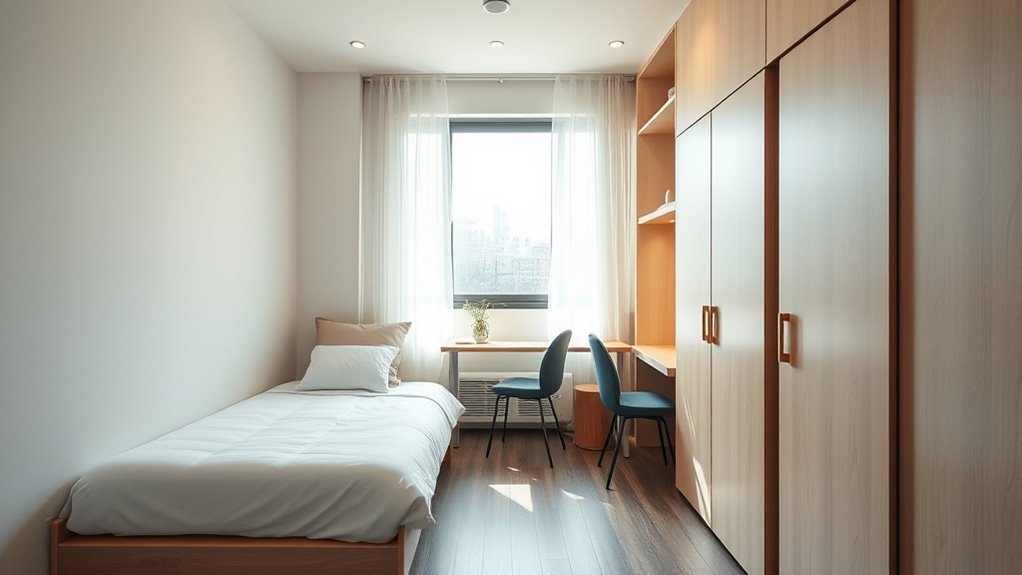
Trying out different furniture arrangements is key to maximizing space and comfort in your tiny bedroom. Move pieces around to see what works best, paying attention to how the layout influences flow and openness. Experiment with various color schemes; lighter tones can make the room feel larger, while bold accents add personality without clutter. Incorporate decorative accents thoughtfully—use wall-mounted shelves or compact furniture to free up floor space. Don’t hesitate to try different bed placements or multi-functional furniture to optimize every inch. Take your time testing layouts, and consider how each setup complements your preferred color schemes and decorative accents. This trial-and-error process helps you discover the most functional and visually appealing arrangement that makes your small space feel bigger and more inviting.
Frequently Asked Questions
How Can I Make My Tiny Bedroom Feel More Spacious Without Major Renovations?
You can make your tiny bedroom feel more spacious by using wall-mounted decor to free up floor space and create an open feel. Invest in multi-functional furniture like a bed with storage drawers or a fold-out desk, which maximizes utility without crowding your room. Keep clutter minimal, opt for light colors, and arrange furniture strategically to enhance flow and make your space seem larger.
What Are the Best Lighting Options to Enhance Space Perception?
You should use a combination of ambient lighting and task lighting to make your tiny bedroom feel more spacious. Opt for wall-mounted or ceiling lights to provide even, soft illumination that brightens the room without taking up space. Add task lighting like bedside lamps or clip-on lights for specific areas. This layered approach enhances perception of space, making your room feel larger, brighter, and more inviting.
How Do I Choose the Right Color Scheme for a Small Bedroom?
Did you know that 60% of people feel more relaxed in rooms with harmonious color schemes? To choose the right colors for your small bedroom, focus on color harmony to create a cohesive look, using light or neutral shades to enhance space perception. Opt for soft blues, greens, or pastels to boost mood and make the room feel larger and inviting. Your choice can markedly impact how spacious and calming your bedroom feels.
Are There Specific Storage Hacks for Awkward or Underused Corners?
You can maximize awkward or underused corners by installing corner shelving to create extra storage without cluttering your space. Consider using hidden compartments or built-in cabinets tucked into corners for a sleek, seamless look. These hacks help you utilize every inch efficiently, keeping your tiny bedroom organized and spacious. Plus, they add a stylish touch that complements your overall decor, making your small space feel more functional and inviting.
How Can I Personalize My Small Bedroom Without Cluttering It?
Your tiny bedroom is a blank canvas waiting for your personal touch. Add decorative accents like framed photos or meaningful trinkets to tell your story without adding clutter. Use cozy textiles, such as throw pillows and soft blankets, to create warmth and personality. Keep surfaces clear, focusing on meaningful pieces, so your space feels inviting and uniquely yours without feeling overwhelmed. Your small sanctuary becomes a reflection of your style and soul.
Conclusion
By thoughtfully arranging your tiny bedroom, you can make every inch count and turn it into a cozy haven. Prioritize essentials, choose versatile furniture, and keep things streamlined. Remember, sometimes less is more—less clutter, more space. Don’t be afraid to experiment with layouts until you find what works best. With a little creativity and planning, you’ll reveal the secret to making your small space feel much bigger than it appears.