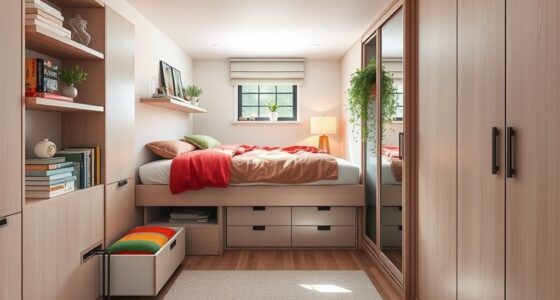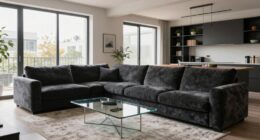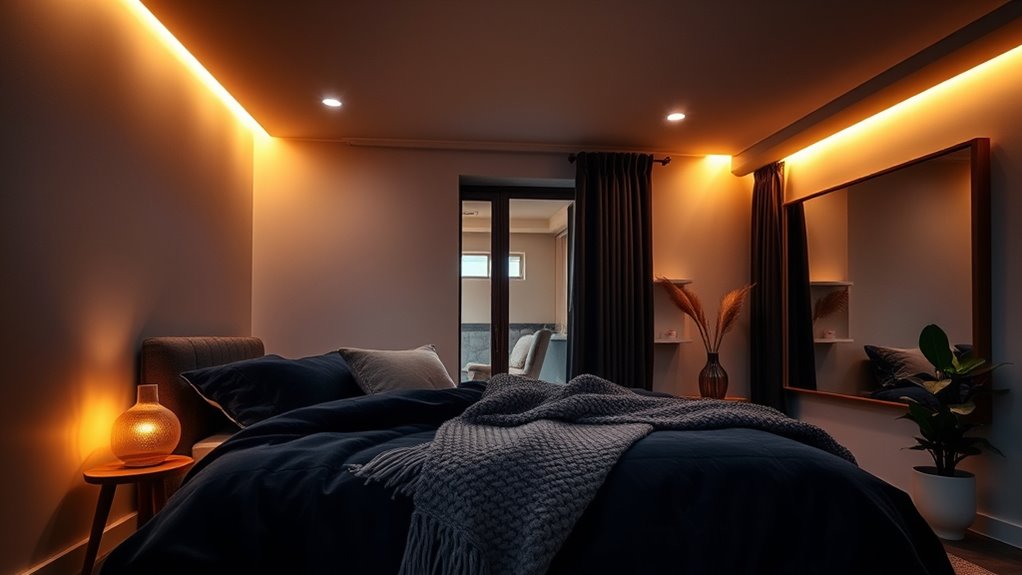
To make a windowless bedroom feel comfortable, focus on layered lighting such as dimmable ceiling fixtures, task lamps, and LED strips to mimic sunlight and add warmth. Use light, neutral colors like creams or pastels to brighten the space, and incorporate mirrors to reflect light and create the illusion of openness. Thoughtful furniture placement and reflective surfaces can boost comfort further. Keep exploring how these elements work together to transform your room into a cozy retreat.
Key Takeaways
- Use layered, adjustable lighting including ceiling fixtures, task lamps, and LED strips to mimic natural daylight.
- Choose light, neutral colors and warm tones to create a calming, spacious atmosphere.
- Incorporate mirrors and glossy surfaces to reflect light and visually expand the room.
- Arrange furniture strategically to maximize space and light flow, avoiding clutter.
- Add soft textures and subtle accents to enhance comfort and create a cozy, inviting environment.
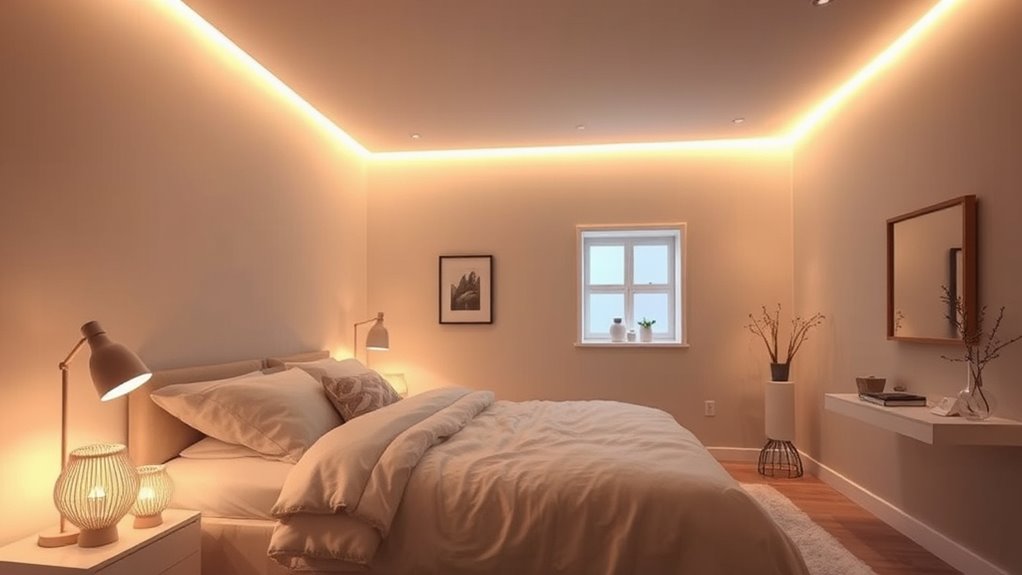
Creating a comfortable bedroom without windows can feel challenging, but with the right design choices, you can turn it into a cozy retreat. One of the most effective ways to do this is by carefully selecting lighting options. Since natural light isn’t available, you need to create a layered lighting scheme that mimics daylight and provides warmth. Start with a central ceiling light, preferably a dimmable fixture, so you can adjust the brightness based on your mood or time of day. Incorporate task lighting like bedside lamps or reading sconces to add focused illumination where you need it most. Consider adding LED strip lights behind furniture or along ceiling coves to create a soft, ambient glow that enhances the room’s warmth and depth. Using a variety of lighting sources helps eliminate shadows and makes the space feel more open and inviting. Additionally, integrating layered lighting can help craft a dynamic atmosphere that compensates for the lack of natural sunlight. Color schemes also play a *paramount* role in making a windowless bedroom feel welcoming. Light, neutral colors such as whites, creams, or soft pastels reflect light better and make the space appear larger and more open. Darker shades can make the room feel smaller and more enclosed, so it’s best to avoid deep hues unless balanced with sufficient lighting. You can incorporate subtle accent colors through bedding, artwork, or decorative accessories to add personality without overwhelming the senses. Warm tones like beige, light gray, or blush can create a soothing atmosphere, while cool tones like soft blues or greens promote relaxation. Keep in mind that the goal is to foster a sense of calm and openness, so choose colors that evoke serenity and comfort. To further enhance the room’s ambiance, consider using reflective surfaces such as mirrors or glossy finishes. Mirrors not only make the space feel larger but also bounce light around, amplifying the effect of your lighting choices. Combining thoughtful lighting with a bright, harmonious color palette creates an environment that feels lively and cozy, despite the absence of windows. You should also pay attention to the arrangement of furniture to maximize space and light flow, but these elements work best when your lighting and color schemes are thoughtfully curated. With these strategies, your bedroom can become a peaceful sanctuary that feels just as open and inviting as one with windows.

hepside 12Inch Flush Mount Light Fixture White, 28Watt, Dimmable & 3000K-4500K-6000K 3 Color Selectable Flush Ceiling Light Fixture 3200LM Low Profile Ceiling Light for Kitchen Bedroom Hallway Porch
【Easy Installation and Long Lifespan 】- Clear instructions included, just take 3 easy steps, Hepside flush mount light…
As an affiliate, we earn on qualifying purchases.
As an affiliate, we earn on qualifying purchases.
Frequently Asked Questions
Can Plants Survive in a Windowless Bedroom?
Yes, plants can survive in a windowless bedroom if you choose the right ones. Indoor gardening with low light plants like pothos, snake plants, or ZZ plants works well in such spaces. Make sure you provide some artificial light or occasional sunlight, and avoid overwatering. These hardy plants thrive in low light conditions and can improve your room’s ambiance, making your space feel more lively and inviting.
What Are the Best Lighting Options for No-Window Rooms?
Did you know that proper lighting can boost your mood by up to 15%? In a no-window room, artificial lighting is your best bet. Opt for layered options like bright ceiling lights, warm task lighting, and decorative fixtures to create a cozy atmosphere. Use dimmable LEDs for flexibility, and consider fixtures with a soft glow to mimic natural sunlight, making your space feel inviting and comfortable.
How Can I Improve Air Quality Without Natural Ventilation?
You can improve air quality in your windowless bedroom by using air purifiers with HEPA filters to remove pollutants and allergens. Keep the space well-ventilated with exhaust fans or air exchange systems, and consider adding houseplants known for purifying air. Regularly clean and dust surfaces to prevent buildup of dust and mold. These steps help guarantee fresh, healthy air, making your room more comfortable and safer to breathe.
Is It Healthier to Have a Windowless Bedroom?
It’s not healthier to have a windowless bedroom, as proper ventilation strategies are essential to maintain air quality. You should use air purifiers, exhaust fans, and humidity control devices to prevent stale air and mold buildup. Regularly ventilate with mechanical systems, and keep humidity levels balanced. This way, you reduce allergens and moisture, creating a safer, more comfortable environment even without natural light or windows.
How Do I Prevent Mold in a Windowless Space?
Think of mold prevention in your windowless room like keeping a garden healthy. You must prioritize proper ventilation solutions, such as installing exhaust fans or dehumidifiers, to reduce moisture. Regularly check for leaks or condensation, and use mold-resistant paints. These mold prevention tips help keep mold at bay, ensuring your space stays fresh and safe, even without windows. Consistent airflow and moisture control are your best defenses.

KSIPZE 100ft Led Strip Lights RGB Music Sync Color Changing Led Lights with Smart App Control Remote Led Lights for Bedroom Room Lighting Flexible Home Décor
APP and IR Remote Contorl: With a stable connection,control your LED lights,freely change in 16 million colors,adjust brightness,customize…
As an affiliate, we earn on qualifying purchases.
As an affiliate, we earn on qualifying purchases.
Conclusion
Creating a cozy bedroom without windows is like planting a garden in the dark—you bring in your own light and life. Use warm colors, layered lighting, and personal touches to turn the space into a sanctuary that feels inviting and alive. Remember, you hold the key to transforming this hidden corner into a comfortable retreat. With a little effort, your room will bloom into a space that feels just right, even without natural sunlight.
![iZELL Desk Lamp, [3 Color Modes & 10 Brightness] LED Reading Light with Clamp, Silicone Flexible Arm Book Light for Kids Reading Book in Bed at Night Clip on Table, Headboard, Dorm - 15.8‘’ Black](https://m.media-amazon.com/images/I/41kabBTJ2SL._SL500_.jpg)
iZELL Desk Lamp, [3 Color Modes & 10 Brightness] LED Reading Light with Clamp, Silicone Flexible Arm Book Light for Kids Reading Book in Bed at Night Clip on Table, Headboard, Dorm – 15.8‘’ Black
【ENERGY SAVING EYE CARE LAMP】- This led book light consumes 80% less energy compared to incandescent lamps. Consists…
As an affiliate, we earn on qualifying purchases.
As an affiliate, we earn on qualifying purchases.

DUMOS Arched Full Length Mirror with Stand 64"x21" Floor Standing Aluminum Frame for Bedroom Body Hanging Leaning Modern Simple Home Decor Shatter-proorf Nano Glass Wall Living Room Cloakroom Black
Mirror Full Length: The size of the full length mirror is 64"x21". The large size of the mirror…
As an affiliate, we earn on qualifying purchases.
As an affiliate, we earn on qualifying purchases.