
To maintain privacy in shared bathrooms without locks, you can use clear signage like “Occupied” or “Please Knock” to communicate your needs. Installing indicator lights or ventilation fans with occupancy signals further helps prevent misunderstandings, while hanging curtains or using privacy screens offers a quick visual barrier. Combining these strategies creates a respectful environment and minimizes awkward situations. Continue exploring these options to discover effective, non-permanent privacy solutions that work for you.
Key Takeaways
- Use visual cues like “Occupied” signs or indicator lights to signal bathroom use without locks.
- Install temporary privacy barriers such as curtains or foldable screens inside the bathroom.
- Hang clear signage like “Please Knock” or “In Use” to communicate privacy needs effectively.
- Implement airflow solutions with sensors or fans that signal occupancy visually or audibly.
- Foster respectful communication and boundary setting among housemates to reinforce privacy expectations.
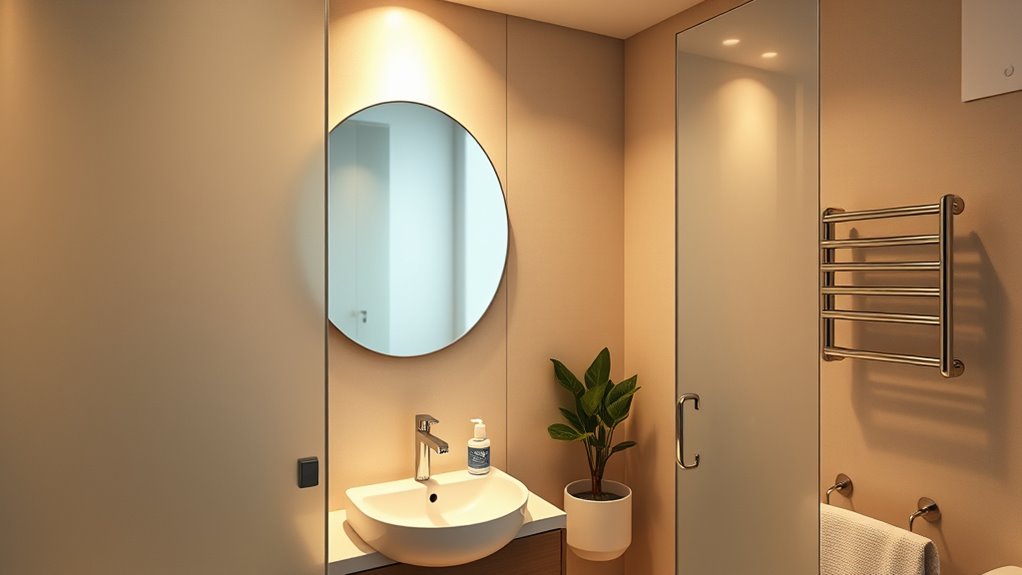
Many bathrooms lack locks, which can make privacy a challenge, especially in shared spaces. When you’re sharing a bathroom with housemates or family members, the absence of a lock often leaves you feeling vulnerable or uncomfortable. Fortunately, there are practical solutions to help you maintain your privacy without the need for a lock. One of the first steps is to explore ventilation options that can signal when the bathroom is in use. Installing a simple indicator light or a ventilation fan with a switch that includes an “occupied” setting can serve as a visual cue for others. This helps prevent accidental intrusions and reassures you that your privacy is respected. Additionally, some ventilation fans come with built-in sensors or timers, so you can set them to run during your use, further signaling that the space is occupied. Moreover, incorporating air quality indicators that detect humidity or pollutants can notify you when the bathroom is in use, indirectly signaling occupancy to housemates.
Using indicator lights or ventilation fans can effectively signal bathroom occupancy and protect your privacy.
Beyond ventilation, bathroom signage offers a straightforward and effective way to communicate your privacy needs. Clear, simple signs such as “Occupied,” “In Use,” or “Please Knock” can be placed on the door to alert others when you’re inside. These signs are inexpensive, easy to make, and can be customized to fit your style or the decor of your bathroom. Using bathroom signage reduces misunderstandings and helps establish boundaries without confrontation. It’s a non-intrusive way to let housemates know when you need privacy, especially if you’re studying, working from home, or just want some quiet time.
Another practical tip is to use physical barriers or temporary solutions. For example, hanging a curtain or using a foldable privacy screen can give you a visual barrier, making it clear that the space is off-limits temporarily. These options are portable, affordable, and easy to put up or take down, which makes them perfect for shared environments. Pair these with a polite but firm communication style to set expectations with your housemates. Let them know your privacy boundaries, and encourage mutual respect.
Ultimately, maintaining privacy in a bathroom without locks requires a combination of thoughtful communication, visual cues, and practical modifications. By utilizing ventilation options that signal occupancy and bathroom signage to communicate clearly, you can create a respectful environment that minimizes awkwardness. These simple strategies help you feel more secure and comfortable, even in the absence of a lock, fostering better understanding among housemates and making shared living more harmonious.

HOTZ StinkAlert Bathroom Warning Light – Press-to-Activate 10-Minute Timer for Bathroom Door – Funny Gag Gift for Adults
Press to Warn With a Manual 10-Minute Timer: Press the button after use to turn on the neon…
As an affiliate, we earn on qualifying purchases.
As an affiliate, we earn on qualifying purchases.
Frequently Asked Questions
Are There Temporary Privacy Options Without Installing Locks?
Yes, you can create temporary privacy in your bathroom without installing locks by using privacy curtains or portable screens. Privacy curtains hang easily from a tension rod or hooks, providing instant coverage. Portable screens are lightweight and can be moved around as needed, offering flexible privacy solutions. Both options are simple to set up, remove, and don’t require any permanent modifications, making them perfect for quick, temporary privacy needs.
How Can I Signal Privacy to Housemates?
Think of a lighthouse guiding ships—your signaling cues can do the same. Use a simple sign or a piece of cloth on the door handle to signal privacy, making it clear you’re occupied. Combine visual cues with noise control, like a door hanger or a “do not disturb” sign, so housemates understand your need for privacy without words. This visual language helps maintain respect and smooths household harmony.
Can Door Accessories Improve Privacy Without Locks?
Door accessories like door curtains and privacy signs can definitely improve your bathroom privacy without locks. You can hang a curtain across the door to block visibility and add a privacy sign to clearly communicate your needs. These simple, affordable solutions are easy to install and remove, giving you control over your privacy without the need for locks. Plus, they help set clear boundaries with housemates, making shared spaces more comfortable.
What Are the Best Non-Permanent Privacy Solutions?
Use privacy film or privacy screens to quickly and effectively enhance your bathroom’s privacy without permanent changes. These solutions are easy to install, removable, and affordable. Privacy film can be applied to windows to block visibility, while privacy screens can be placed strategically inside or outside the bathroom. Both options offer instant privacy, are non-permanent, and can be removed or repositioned as needed, giving you flexibility and peace of mind.
How Do I Handle Privacy Disputes in Shared Bathrooms?
When handling privacy disputes in shared bathrooms, prioritize clear communication and privacy etiquette. Talk openly with your housemates about boundaries and expectations, and listen to their concerns. Use respectful language and establish shared rules to prevent misunderstandings. If conflicts arise, address them calmly and promptly, emphasizing mutual respect. Effective communication strategies help maintain harmony and ensure everyone feels comfortable, even without permanent lock solutions.
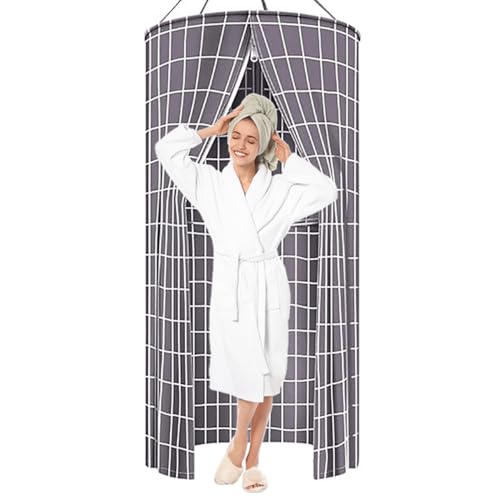
ZVOBUEI 39"x78" Round Shower Curtain Hanging Bathroom Curtains with Storage and Double Zipper Waterproof Portable Shower Curtain Sets for Camping & Outdoor Privacy
★High Quality: The ZVOBUEI round shower curtain is made by waterproof polyester fabric, which is waterproof.Circular shower curtain’s…
As an affiliate, we earn on qualifying purchases.
As an affiliate, we earn on qualifying purchases.
Conclusion
So, next time you find yourself scrambling for privacy without a lock, remember that simple solutions like curtains or signs can surprisingly make a difference. Sometimes, it’s those little adjustments that unexpectedly create a sense of space and respect among housemates. Just like stumbling upon a forgotten note or a hidden key, these small changes can turn an awkward moment into a respectful one. In the end, a little creativity goes a long way in keeping everyone comfortable.

Kecreque Room Divider 4 Panel Partition Room Dividers & Folding Privacy Screens w/ 3 Metal Feet,88" W Portable Wall Doubles as a Dressing Screen Wall Divider for Office Bedroom Children's Room,White
PRIVACY SCREEN:Room partition consists of 4 polyester fibre panels with high confidentiality,anti-wrinkle,wear-resistant,waterproof,daily maintenance of the room screen divider…
As an affiliate, we earn on qualifying purchases.
As an affiliate, we earn on qualifying purchases.

7''x2'' Magnetic Privacy Indicator, Do Not Disturb Sign for Office, Vacant Occupied Slider for Bathroom Door, Welcome Please Knock, with Adhesive Sticker Fits All Doors (Vacant Occupied Sign-Sliver)
✅EASE AND VISIBILITY: Occupied sign has a tighter track would make the the sliding window snap in place….
As an affiliate, we earn on qualifying purchases.
As an affiliate, we earn on qualifying purchases.