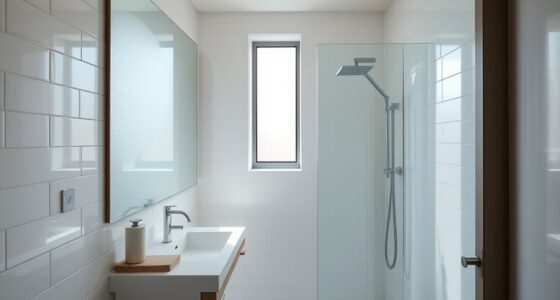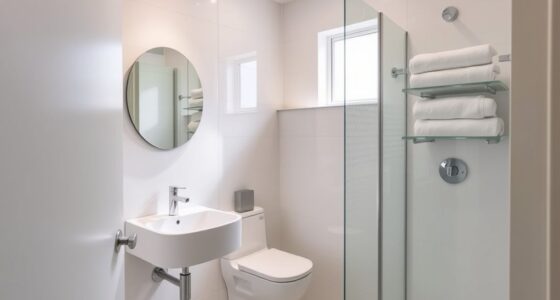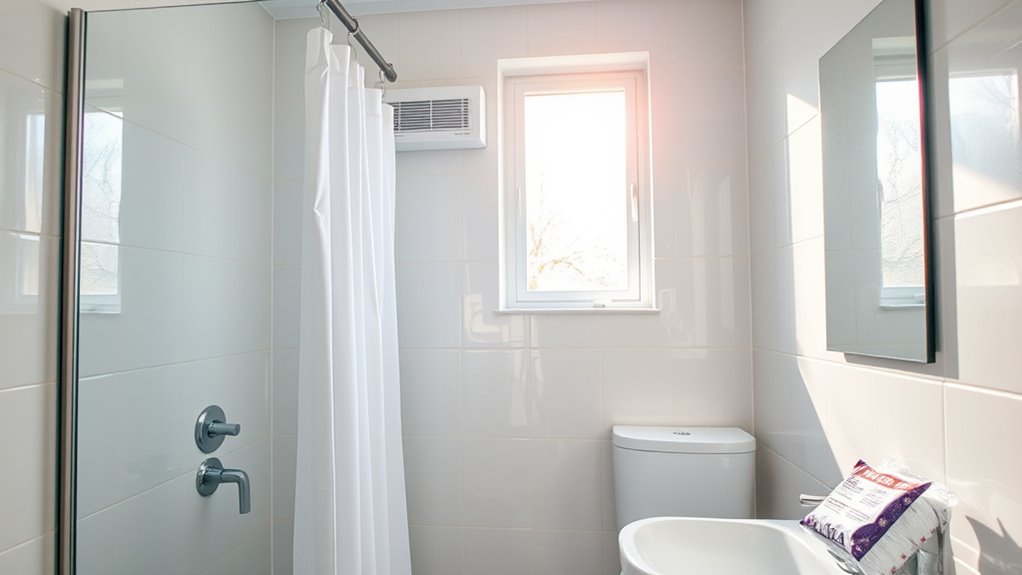

To prevent mold and mildew in your small, damp bathroom, you need to boost ventilation by using exhaust fans and opening windows during and after showers. Keep surfaces dry by wiping down walls, mirrors, and tiles, and consider using a squeegee on glass doors. Control humidity with a dehumidifier and fix leaks promptly. Maintaining good airflow and dry materials helps stop mold growth—keep exploring for more effective tips.
Key Takeaways
- Increase ventilation by using exhaust fans and opening windows during and after showers.
- Wipe down surfaces and use squeegees to remove excess moisture from walls and glass doors.
- Apply mold-resistant paint and clean grout lines regularly with mold-killing solutions.
- Fix leaks promptly and maintain plumbing to prevent persistent dampness.
- Keep bathroom items dry and well-organized to promote airflow and reduce mold-harboring areas.
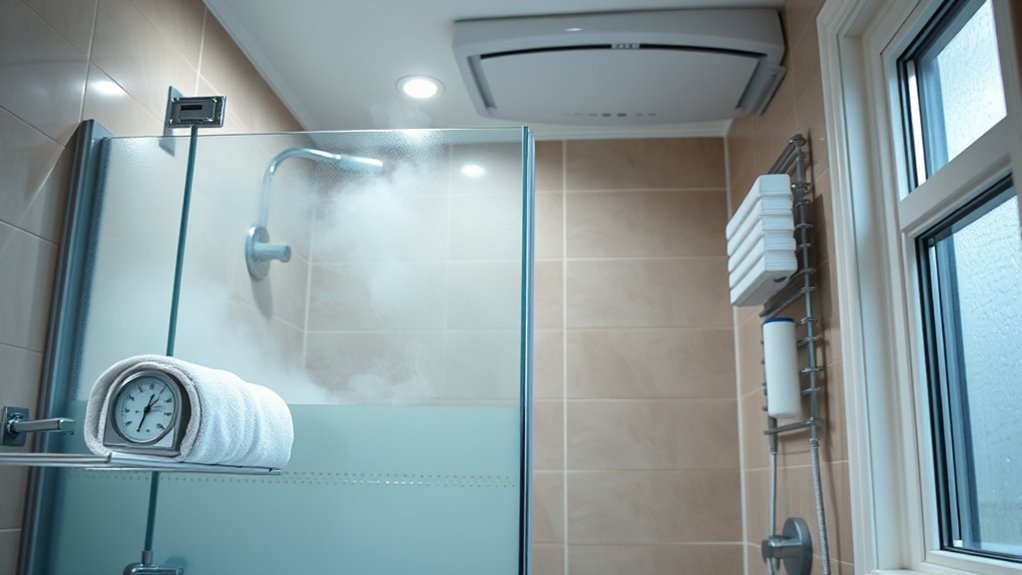
A small damp bathroom is a prime environment for mold and mildew to thrive if you don’t take steps to prevent them. The key to keeping these fungi at bay lies in effective ventilation strategies and moisture control techniques. Since small bathrooms tend to trap humidity, you need to actively manage airflow and moisture levels to create an inhospitable environment for mold growth.
Start by improving your bathroom’s ventilation. If you have an exhaust fan, turn it on during and after showers to quickly remove excess moisture from the air. Make sure the fan is powerful enough for the size of your space—consider upgrading if it’s noisy or ineffective. If a fan isn’t available, open a window or door during and after showers to encourage cross-ventilation. Installing a vent or exhaust system that directs moist air outside can considerably reduce humidity levels over time. Good airflow not only helps dry surfaces faster but also prevents the stagnant, humid conditions mold needs to thrive.
Improve ventilation by using exhaust fans or opening windows to reduce moisture and prevent mold growth.
Moisture control techniques are just as important. Wipe down surfaces like the shower walls, mirror, and sink after use to remove residual water. Keep bathroom surfaces as dry as possible, especially in corners and grout lines where water tends to accumulate. Use a squeegee on glass shower doors and tiles to eliminate lingering moisture. Additionally, consider adding a dehumidifier if your bathroom tends to stay damp despite ventilation efforts. This device actively pulls moisture from the air, maintaining a consistent humidity level below 60%, which is less hospitable to mold growth.
Inspect your bathroom regularly for leaks or signs of water damage. Fix dripping faucets, leaking pipes, or faulty seals promptly to prevent persistent dampness. Using mold-resistant paint on walls and ceilings can also serve as a barrier against mold spores settling and proliferating. When you clean, opt for mold-killing solutions like vinegar or commercial mold removers, especially in grout lines and corners where mold spores tend to settle.
Finally, keep your bathroom organized and clutter-free. Items stored in damp, poorly ventilated areas can harbor mold spores. Ensure towels, bathmats, and other fabrics dry thoroughly between uses. By combining proper ventilation strategies with moisture control techniques, you can create a dry, inhospitable environment that deters mold and mildew from taking hold. Regular maintenance and attention to humidity levels will keep your small bathroom fresh, clean, and mold-free for years to come.
Frequently Asked Questions
Can Mold Cause Health Problems in Bathrooms?
Yes, mold can cause health problems in bathrooms, especially if you have a mold allergy or respiratory issues. Breathing in mold spores may trigger allergy symptoms like sneezing, coughing, or itchy eyes. In people with asthma or other respiratory conditions, mold exposure can worsen symptoms or cause infections. To protect your health, keep your bathroom dry, ventilate well, and clean mold promptly to prevent these risks from building up.
Are There Natural Remedies to Prevent Mold Growth?
Yes, you can use natural remedies like herbal sprays and essential oils to prevent mold growth. Spray a mixture of water and essential oils such as tea tree, eucalyptus, or lavender on bathroom surfaces regularly. These oils have antifungal properties that inhibit mold. Additionally, herbal sprays with ingredients like vinegar or citrus can help keep your bathroom dry and mold-free, creating an inhospitable environment for mold and mildew growth.
How Often Should I Clean Bathroom Vents?
You should clean your bathroom vents at least once every three to six months to maintain ideal air circulation and prevent mold buildup. Regular vent cleaning helps remove dust, dirt, and potential mold spores, improving airflow and reducing dampness. If your bathroom is very damp, consider cleaning vents more frequently. Proper air circulation is essential to keeping the space dry and mold-free, especially in small, humid bathrooms.
What Type of Paint Resists Mold?
Think of mold-resistant paint as a shield for your bathroom walls. You should choose paints labeled “mold resistant” or “mildew resistant” for best protection. When doing bathroom painting tips, guarantee surfaces are clean and dry before applying, and consider applying a primer first. This layer helps the mold resistant paint bond well, creating a barrier that fights moisture and keeps your bathroom fresh and clean.
Does Leaving the Bathroom Door Open Help Prevent Mold?
Yes, leaving the bathroom door open helps prevent mold by improving bathroom ventilation. When you keep the door open, it allows fresh air to circulate, reducing humidity and drying out mold spores that thrive in damp environments. Good airflow is essential for controlling moisture levels, which is key to preventing mold and mildew growth in small, damp bathrooms. Keep the door open after showers to maintain a healthier, mold-free space.
Conclusion
By banishing excess moisture and boosting bathroom brightness, you’ll banish bothersome mold and mildew. Keep vents vibrant and vents clear, dry surfaces diligently, and don’t forget to scrub stubborn spots swiftly. With consistent care and clever cleaning, your small space stays sparkling, safe, and mold-free. Master these methods, and your bathroom will remain a beautiful, breathable haven—free from fungi and fuss. Stay vigilant, and enjoy a fresh, fungus-free bathroom every day!