To handle humidity without an exhaust fan, open windows and doors after showers to promote natural airflow, and consider installing a vented skylight for better ventilation. Use portable fans to push moist air out and operate them during and after showers. Adding a small dehumidifier helps remove excess moisture, while sealing gaps and choosing mold-resistant materials prevent mold growth. For more effective tips, explore additional strategies to keep your bathroom fresh and mold-free.
Key Takeaways
- Increase natural ventilation by opening windows and doors after showers to release humid air.
- Use portable fans near doorways or windows to help push moisture outside.
- Install moisture control devices like dehumidifiers to actively reduce humidity levels.
- Seal gaps around fixtures and use waterproof materials to prevent moisture ingress.
- Regularly clean surfaces and wipe away water to inhibit mold growth in the absence of an exhaust fan.
If your bathroom lacks an exhaust fan, moisture buildup can quickly lead to mold, mildew, and lingering odors. Without proper ventilation, humidity stays trapped, creating an environment where mold spores thrive. Luckily, you can explore ventilation alternatives to help keep moisture levels in check and prevent mold growth. These options aren’t as automatic as an exhaust fan but can be highly effective when used consistently.
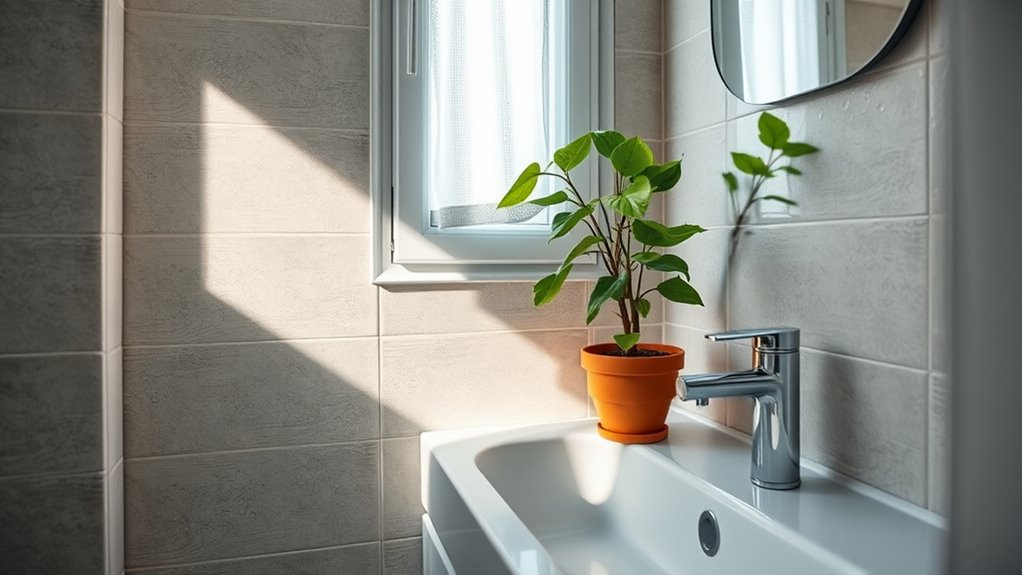
One of the simplest ventilation alternatives is opening windows and doors after each shower or bath. This allows humid air to escape and fresh air to circulate, reducing overall moisture levels. If your bathroom doesn’t have a window, consider installing one or using a vented skylight if possible. Even a small window can make a significant difference in controlling humidity. When natural ventilation isn’t enough, using portable fans can help accelerate airflow. Position a fan near the doorway or window to push moist air out and bring in drier air from other parts of your home.
Open windows and doors after showers to reduce moisture and prevent mold buildup.
Dehumidifiers are another excellent option for mold prevention in bathrooms without exhaust fans. They actively remove excess moisture from the air, maintaining a lower humidity level. Compact models can be placed conveniently in the bathroom and run during or after showers to keep humidity under control. Additionally, ensuring your bathroom has good insulation and sealing gaps around windows, doors, and fixtures can prevent moisture from seeping in and lingering. Proper ventilation management is essential for maintaining a healthy bathroom environment.
You should also pay attention to the materials used in your bathroom. Opt for mold-resistant paint on walls, and choose tiles or waterproof materials that won’t absorb moisture. Regular cleaning with mold-inhibiting solutions will further discourage mold growth. Keep your bathroom dry by wiping down surfaces after use, especially around sinks, tubs, and toilets, where water tends to pool or splash.
Maintaining these ventilation alternatives consistently is key to mold prevention. By actively managing humidity levels, you reduce the risk of mold spores settling and growing. Remember, the goal isn’t just to eliminate moisture temporarily but to prevent it from becoming a persistent problem. Regularly inspecting your bathroom for signs of mold or mildew, especially in corners and behind fixtures, allows you to catch issues early. With a combination of proper ventilation strategies and diligent cleaning, you can keep your bathroom fresh, dry, and free from mold—even without an exhaust fan.
Top picks for "deal humidity tips"
Open Amazon search results for this keyword.
As an affiliate, we earn on qualifying purchases.
Frequently Asked Questions
Can Plants Help Reduce Bathroom Humidity Effectively?
Plants can help reduce bathroom humidity effectively because of their natural ability for humidity control. Their leaves absorb moisture from the air, which benefits plant health and creates a more comfortable environment. Incorporating plants into your bathroom not only adds a touch of greenery but also promotes better air quality. Choose moisture-loving plants like ferns or pothos, and you’ll notice a positive impact on humidity levels over time.
What Is the Best Way to Dry Out a Bathroom Naturally?
To naturally dry out your bathroom, you should maximize ventilation options like opening windows and doors after showers. Use a squeegee to remove excess water from surfaces and hang damp towels outside to air dry. Keep the space well-ventilated by leaving the door open when not in use, and consider placing moisture-absorbing materials like silica gel or charcoal. These steps promote natural drying and reduce humidity effectively.
Are There Any DIY Solutions for Improving Air Circulation?
Think of your bathroom as a tiny greenhouse needing fresh air to thrive. You can boost air circulation with simple ventilation hacks like creating DIY fans from small computer fans or oscillating fans. Position these near windows or vents to push moist air out. Regularly opening windows and using portable fans helps, too. These DIY solutions are easy, inexpensive, and effective in transforming your bathroom into a more breathable space.
How Often Should I Clean Mold From Bathroom Surfaces?
You should clean mold from bathroom surfaces at least once a week to prevent growth and maintain a healthy space. Regular cleaning helps with mold prevention by removing moisture and soap scum that mold feeds on. If you notice mold developing sooner, increase your cleaning frequency. Using a mixture of water and vinegar or a commercial mold cleaner will effectively eliminate mold and keep your bathroom fresh and safe.
Can a Dehumidifier Be Safely Used in a Bathroom Without an Exhaust Fan?
You can safely use a dehumidifier in your bathroom to combat moisture, but you should be cautious. Visualize it as a device working like a sponge, absorbing excess humidity without causing harm. Make certain you choose a model designed for damp environments, and keep it well-maintained to avoid electrical issues. Proper dehumidifier safety measures help control bathroom moisture effectively, reducing mold risk and making your space more comfortable.
Conclusion
By implementing these simple strategies, you’ll successfully suppress stubborn moisture and safeguard your sanctuary. Consistently vent, vigilantly wipe, and wisely utilize dehumidifiers to diminish dampness. Remember, proactive practices prevent pesky mold and mildew from taking root. With a little effort and a touch of tactical troubleshooting, you’ll transform your bathroom into a breezy, beautiful space—free from humidity hassles. Stay savvy, stay serene, and enjoy a fresh, fungus-free finish every time.