
To avoid dings and scratches when moving furniture through tight spaces, plan your route carefully by measuring doorways and obstacles first. Use furniture sliders, dollies, and straps to protect floors and stabilize items, making them easier to maneuver. Wrap edges and surfaces with moving blankets or bubble wrap to cushion delicate parts, and disassemble bulky pieces if possible. Move slowly and communicate clearly with helpers. If you want to master these tricks, keep exploring for more expert tips.
Listen free for 30 days with Audible
Thousands of audiobooks and originals — cancel anytime.
As an affiliate, we earn on qualifying purchases.
Key Takeaways
- Use furniture sliders and protective padding to reduce friction and prevent scratches during movement.
- Disassemble bulky furniture to minimize size and navigate tight spots more easily.
- Measure doorways, hallways, and obstacles beforehand to plan the safest route.
- Tilt and angle furniture carefully to fit through narrow openings without damage.
- Move slowly, communicate clearly with helpers, and adjust your approach as needed for safety and protection.

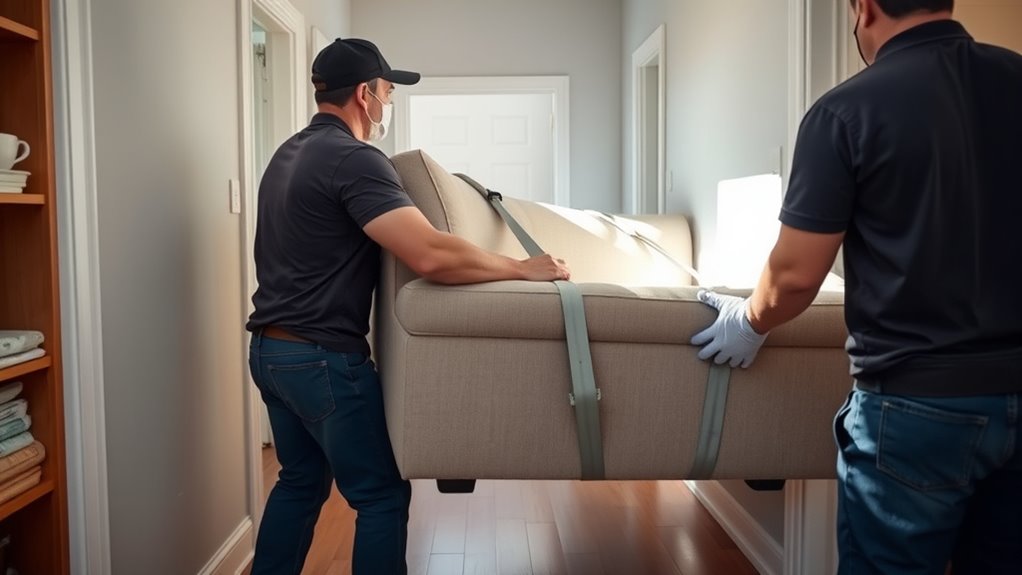
Moving furniture in tight spaces can be challenging, but with the right approach, it becomes manageable. When you’re steering narrow hallways, cramped doorways, or crowded rooms, the key is to plan ahead and use the right tools to prevent damage. Useful tools such as furniture sliders, dollies, and straps can make all the difference. Furniture sliders, for instance, allow you to glide heavy pieces across floors with minimal effort, reducing the risk of scraping or gouging surfaces. Dollies help stabilize large items, giving you better control while maneuvering through tight corners. Straps or lifting straps distribute weight evenly, making it easier to lift or tilt furniture without straining your back or causing accidental bumps. Before you start moving, measure doorways, hallways, and staircases to identify potential obstacles. This way, you can plan the best route and avoid last-minute scrambles that might lead to scratches or dents. Proper planning and measurement are essential to avoid unforeseen hurdles during the move.
Use tools like sliders, dollies, and straps to move furniture smoothly through tight spaces without damage.
Protective wrapping is another essential element that can’t be overlooked. Wrap furniture with moving blankets, bubble wrap, or furniture pads to cushion edges and surfaces. These materials act as a buffer against accidental knocks or bumps against walls, door frames, or tight corners. Wrap delicate surfaces carefully, securing the padding with packing tape or stretch wrap, ensuring everything stays in place during the move. Using protective wrapping not only prevents scratches but also minimizes the impact of unforeseen bumps, saving you from costly repairs later.
When you’re actually moving furniture, take your time and work slowly. Don’t rush through narrow spots; instead, tilt and angle furniture carefully to fit through tight openings. If an item is too bulky or heavy, consider disassembling it if possible. Removing legs, cushions, or other detachable parts can considerably reduce the overall size, making it easier to steer through tight spaces. Always lift with your legs, not your back, and communicate clearly with anyone helping you. Good coordination ensures everyone knows their role, reducing the chances of accidental bumps or scrapes. Additionally, utilizing navigation and mapping techniques can help identify the most efficient route through complex layouts.
Lastly, be patient and flexible. Sometimes, a piece might not fit on the first attempt. Take a step back, reassess your approach, and try again with a different angle or route. Using useful tools and protective wrapping effectively, combined with careful planning and patience, makes moving furniture in tight spaces more manageable. With these strategies, you can avoid dings, scratches, and unnecessary stress, ensuring your furniture arrives safe and sound in your new space.
Frequently Asked Questions
How Can I Protect Walls During Furniture Moves?
To protect your walls during furniture moves, start by applying wall padding along the edges that might get bumped. Use painter’s tape to secure the padding in place, ensuring it doesn’t shift as you maneuver furniture. Keep a close eye on sharp or protruding parts of furniture, and work slowly in tight spaces. This simple prep helps prevent scratches and dings, keeping both your walls and furniture safe.
What Tools Are Best for Maneuvering Large Pieces?
Think of maneuvering large furniture as guiding a delicate boat through narrow waters. Use furniture sliders to reduce friction and protect your floors, making turns smoother. Combine sliders with proper lifting techniques—bend your knees, keep your back straight—to avoid strain and damage. These tools and methods make moving heavy pieces easier, safer, and less stressful, helping you navigate tight spaces without scratches or dings, just like a skilled captain steering with confidence.
How Do I Disassemble Furniture Safely for Tight Spaces?
To disassemble furniture safely for tight spaces, start with clear disassembly techniques like removing legs or panels first. Use the right tools, such as screwdrivers and pliers, and keep track of all hardware. Always follow safety precautions—wear gloves, work on a stable surface, and disconnect any electrical components. Carefully label parts to make reassembly easier, and work slowly to avoid damage or injury in confined areas.
What Are Quick Fixes for Minor Scratches?
Did you know that minor scratches can decrease your furniture’s value by up to 20%? For quick fixes, start with furniture polish to blend minor surface scratches. You can also try scratch repair kits or use a matching color crayon or marker for deeper marks. Always clean the area first, and gently buff the scratch to restore your furniture’s appearance without much effort or expense.
How Can I Prevent Furniture From Slipping During Moves?
To prevent furniture from slipping during moves, you should use furniture sliders or non-slip pads. Place sliders under heavy furniture legs or corners to make sliding easier and safer. If you prefer non-slip pads, stick them to the bottom of your furniture to grip the floor and prevent sliding. These tools help you move furniture smoothly without damaging your floors or risking injury, making your move much simpler and safer.
Conclusion
Moving furniture through tight spaces can be tricky, but with the right techniques, you can avoid dings and scratches. Remember to plan your route, use protective gear, and enlist help when needed. Did you know that nearly 60% of furniture damage occurs during moving? By applying these tricks, you’re not only protecting your belongings but also saving money on repairs. Stay patient and careful—you’ll get through those tight spots with minimal hassle!
Flea & tick season Picks
flea and tick prevention
As an affiliate, we earn on qualifying purchases.